
Simulated nuclear crisis tests global readiness in largest exercise of its kind
In an unprecedented test of international emergency preparedness, the World Health Organization (WHO) wrapped up its involvement on June 25th in a 36-hour nuclear crisis exercise coordinated by the International Atomic Energy Agency (IAEA).
The exercise, officially known as the Level 3 Convention Exercise (ConvEx-3), is the IAEA’s most advanced simulation for nuclear emergencies.
This year’s drill, the first since 2021, brought together more than 75 countries and 10 international organizations to respond to a hypothetical severe accident at a nuclear power plant in Romania.
Participants exchanged information around the clock, evaluated evolving hazards, managed public communications and determined protective measures, including the medical response.
“As part of the simulation,” the WHO reports in a news release-sharing email that it sent out to members of the press and US and Global News also received, “WHO set up an Incident Management Support Team composed of experts from country, regional and headquarters offices.”
The scenario required the WHO teams to collaborate with national authorities to track the potential health impacts, share protective health advice and offer guidance on mental health support for both communities and responders.
This year’s exercise introduced several new dimensions, such as the dispatch of international assistance missions, a simulated cybersecurity threat and joint protective actions coordinated by Romania’s neighbors — Bulgaria and the Republic of Moldova. A specially developed social media simulator added another layer, challenging participants to manage crisis communications in real time.
Exercises like ConvEx-3, held every three to five years, aim to stress-test emergency protocols and highlight opportunities for improvement.
“WHO’s ongoing work to strengthen radiation protection of the public, patients and workers worldwide includes providing Member States with evidence-based guidance, tools and technical advice on public health issues related to ionizing and non-ionizing radiation,” says the press release we received.
The IAEA will produce a detailed report outlining key takeaways and areas needing further attention. WHO will also assess its findings and refine its procedures to reinforce global health security in the face of nuclear threats.
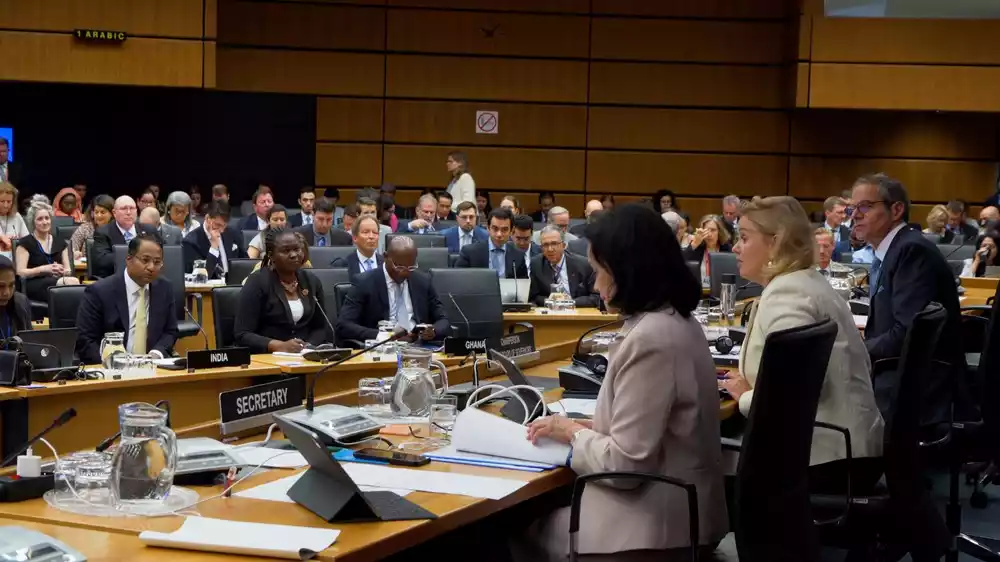
Featured photo is of IAEA’s 1775th Board of Governors Meeting and shows HE Ms. Caroline Vermeulen, Resident Representative of Belgium to the IAEA, and BOG Vice-Chairperson, welcoming delegates and member state representatives at the opening of the meeting held at the agency headquarters in Vienna, Austria June 23, 2025. Photo Attribution: “1775th Board of Governors Meeting (01615614)” by IAEA Imagebank, CC BY 4.0. Photo Credit: Florence Biquet / IAEA. Copyright ©IAEA Images. Some rights reserved.


