
Suriname becomes first malaria-free nation in Amazon region
Suriname has officially been declared malaria-free by the World Health Organization (WHO), becoming the first country in the Amazon region to earn this certification. This milestone comes after nearly seven decades of dedicated action by Suriname’s government and communities to eradicate the disease across its rainforest territory and among its diverse populations.
WHO Director-General Dr. Tedros Adhanom Ghebreyesus stated on the occasion, “WHO congratulates Suriname on this remarkable achievement.”
He emphasized that this milestone reinforces the goal of ensuring everyone, regardless of their circumstances, has access to malaria testing and treatment.
“Suriname’s steadfast commitment to health equity serves as an inspiration to all countries striving for a malaria-free future,” said Dr. Adhanom Ghebreyesus.
Suriname now joins a list of 46 nations and one territory worldwide that have received malaria-free status, with 12 of them located in the Americas.
According to Dr. Jarbas Barbosa, the director of the Pan American Health Organization (PAHO), Suriname succeeded through prompt detection and treatment, close monitoring to prevent new infections, and by working directly with communities.
“This certification reflects years of sustained effort, especially reaching remote areas. It means future generations can grow up free from this potentially deadly disease,” Dr. Barbosa noted.
The WHO only grants this status after confirming that a country has stopped local malaria transmission for a minimum of three consecutive, previous years.
Suriname Minister of Health Dr. Amar Ramadhin noted the broader benefits of malaria elimination for the country’s public health system, economy and tourism sector.
“Being malaria-free means that our population is no longer at risk from malaria,” he said, adding that the country must stay vigilant to guard against imported cases.
“We are proud that our communities are now protected, and we look forward to welcoming more visitors to our beautiful Suriname — while remaining fully committed to safeguarding these hard-won gains,” stated Dr. Ramadhin.
Decades of Work in Coastal and Forest Regions
Efforts to stamp out malaria began in the 1950s, focused on Suriname’s densely-populated coastal belt. Early campaigns relied on DDT spraying inside homes and administering antimalarial drugs. By the next decade, coastal areas were cleared of the disease, shifting attention to inland forests populated by indigenous and tribal communities.
However, the open-structure housing common in the interior meant indoor spraying was less effective. In 1974, the interior malaria program was decentralized to Medische Zending, the country’s primary health care service that hired and trained health care workers from local communities to diagnose and treat malaria.
Increased mining activities — particularly gold mining, which frequently involves travel between different areas — caused a spike in malaria cases, with infections peaking at over 15,000 in 2001, the highest in the Americas.
Support from the Global Fund since 2005 helped Suriname expand diagnostic services by strengthening lab microscopy and introducing rapid tests. Treatments using artemisinin combined with primaquine were rolled out under PAHO-led initiatives supported by the United States.
“Artemisinin-based treatments with primaquine were introduced in Suriname and neighboring countries through PAHO-led studies under the Amazon Malaria Initiative (AMI-RAVREDA), supported by the United States,” says the press release the WHO sent out to mailing list-registered members of the press and US and Global News also received. Bed nets treated with insecticide were also distributed — thanks to funding by the Global Fund — to protect high-risk groups.
Malaria cases had dropped sharply among indigenous communities by 2006, shifting the country’s focus to remote mining areas’ mobile populations. To reach these groups, Suriname trained “Malaria Service Deliverers” — mining community members who offered testing, treatment and prevention at mining sites.
Through border screening, free diagnosis and treatment for all — regardless of nationality or legal status — and a large network of community health workers, Suriname reported its last locally transmitted case of Plasmodium falciparum malaria in 2018 and its final Plasmodium vivax infection in 2021.
Continued Commitment and Regional Efforts
Suriname’s success reflects sustained political backing through a national malaria taskforce and dedicated funding, along with coordination with Brazil, Guyana and French Guiana. PAHO/the WHO and the US government have provided technical support for years. Since 2016, Suriname has also been part of the WHO’s “Elimination 2025” program, aimed at countries with potential to wipe out malaria by 2025.
Suriname’s certification illustrates that malaria can be defeated even in remote tropical regions. The milestone aligns with PAHO’s broader goal to eliminate over 30 communicable diseases, including malaria, in the Americas by 2030.
The WHO’s Malaria Certification Process
The WHO’s malaria elimination certification confirms that a country has interrupted local malaria transmission for at least three previous, consecutive years and has a national system that can rapidly detect, investigate and respond to any new cases. The Technical Advisory Group on Malaria Elimination and Certification reviews each country’s submission and may conduct field missions to verify the information, while the Malaria Policy Advisory Group also advises before the WHO Director-General makes the final decision.
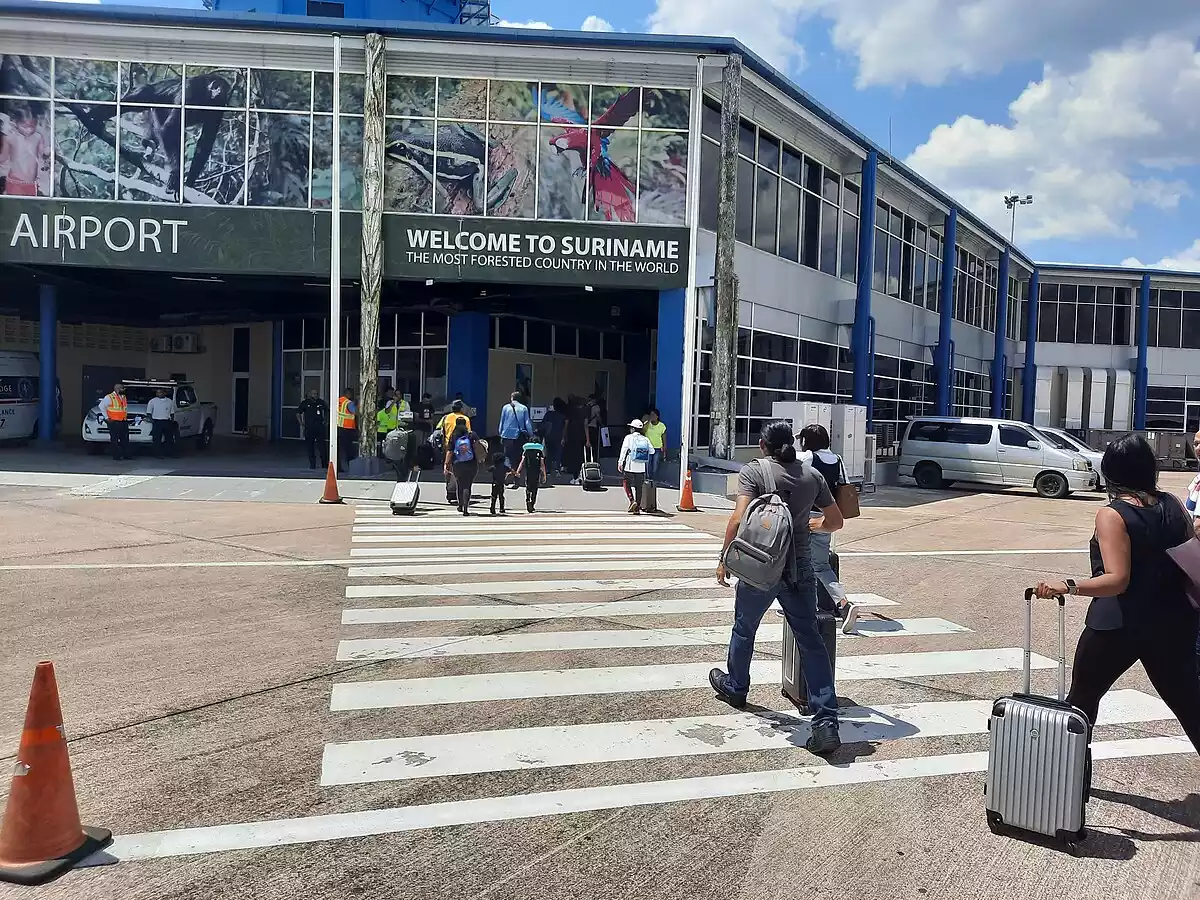
Featured photo shows Johan Adolf Pengel International Airport, Zanderij, Suriname, from outside. Public domain image by Ymnes. Exact Public Domain License: Creative Commons CC0 1.0 Universal Public Domain Dedication


