
119 nations at risk as chikungunya returns, warns WHO
A previous article by the author was cited in a scientific study into a viral disease, with the study being also published by a university ranked 35th globally in the U.S. News & World Report 2024–25 Best University rankings.
The World Health Organization (WHO) has issued a public advisory and an updated Q&A about chikungunya, warning of a global resurgence of the mosquito-borne disease and offering clear guidance for people on how it spreads, how to recognise it and how to reduce the risk of illness and further transmission.
According to the advisory, which US and Global News also received along with other news organizations, the uptick began this year with rising case numbers in Indian Ocean islands: La Réunion, Mayotte and Mauritius reported major outbreaks that started in March and have since seeded cases beyond the region into parts of South and East Asia.
WHO notes this pattern echoes a major outbreak about 20 years ago that began in the same part of the world and ultimately spread widely, infecting nearly half a million people. The organization also highlights continuing transmission in places where chikungunya is endemic; the Americas have reported more than 200,000 cases so far this year. WHO says chikungunya has been detected or transmitted in 119 countries at present or at some point in the past, and recent estimates indicate about 5.6 billion people live in areas suitable for the Aedes mosquitoes that carry chikungunya — a figure that also applies to other Aedes-borne viruses such as dengue and Zika. In populations with little or no immunity, outbreaks can be rapid and intense, sometimes infecting as many as three-quarters of local residents and placing heavy demands on health services.
Caused by a virus of the same name, chikungunya is spread when an infected person is bitten by certain Aedes mosquitoes — primarily Aedes aegypti and Aedes albopictus (the “tiger mosquito”) — which are most active during daylight hours. The illness typically begins 4 to 8 days after an infectious bite. The hallmark symptoms are a sudden high fever and severe joint pain; other common features include muscle pain, rash, headache, nausea and profound tiredness. Most people start to recover within about a week, but joint pain can linger for weeks or months in some cases; a small minority of patients may continue to feel very tired even two years after infection. Severe complications are uncommon but are more likely in newborns, older adults and people with underlying conditions such as high blood pressure, diabetes or heart disease. Pregnant women and young children are also considered higher-risk groups.
Because chikungunya symptoms overlap with those of dengue and Zika, WHO emphasizes that laboratory tests are necessary to confirm infection. In the first week of illness, the virus can be detected directly in the blood using molecular tests or virus isolation. After the first week, antibody tests are used — usually performed 1–2 weeks apart — to identify recent or past infection. Accurate diagnosis is particularly important where several Aedes-transmitted viruses circulate together.
There is no specific antiviral treatment for chikungunya. Care is supportive and focuses on relieving symptoms: paracetamol (acetaminophen) or metamizole where available can reduce fever and pain, and patients should rest and keep well hydrated. WHO warns that aspirin and non-steroidal anti-inflammatory drugs (NSAIDs) such as ibuprofen should be avoided until dengue has been ruled out because of bleeding risk in dengue patients. People whose symptoms worsen or do not improve should seek medical attention, especially those in higher-risk groups.
Prevention is possible by ensuring no mosquito bites occur and by reducing mosquito breeding. WHO’s Q&A lists practical measures for individuals and communities: apply an EPA-approved repellent containing DEET, IR3535 or picaridin (icaridin) according to label instructions; wear long sleeves and trousers during the day; use window and door screens and sleep under mosquito nets when relevant (for example, for people who sleep during the day or to protect vulnerable household members); and remove standing water from items such as tires, buckets, flowerpots and water storage containers at least once a week. Persons with suspected or confirmed chikungunya should also take these precautions during the first week of illness so that mosquitoes cannot pick up the virus and spread it further.
WHO also outlines vector control actions that public-health authorities may deploy during outbreaks, including targeted insecticide spraying (fogging), indoor residual spraying, larvicide treatment of water containers and community campaigns to destroy breeding sites. The agency stresses that preventing chikungunya requires sustained, coordinated community action: when households and local authorities work together to reduce breeding sites and protect people from bites, transmission falls and outbreaks can be averted or contained.
The WHO Q&A, published by the agency here, provides user-friendly answers on what chikungunya is, where it occurs, how it spreads, the typical symptoms and timelines, how it is diagnosed and treated, who is most at risk and practical steps individuals and communities can take to reduce the disease’s spread. The agency’s advisory underscores the need for strengthened mosquito surveillance and control, improved clinical and laboratory capacity to detect and manage cases, and prompt public guidance to protect people and lighten pressure on health systems should outbreaks expand.
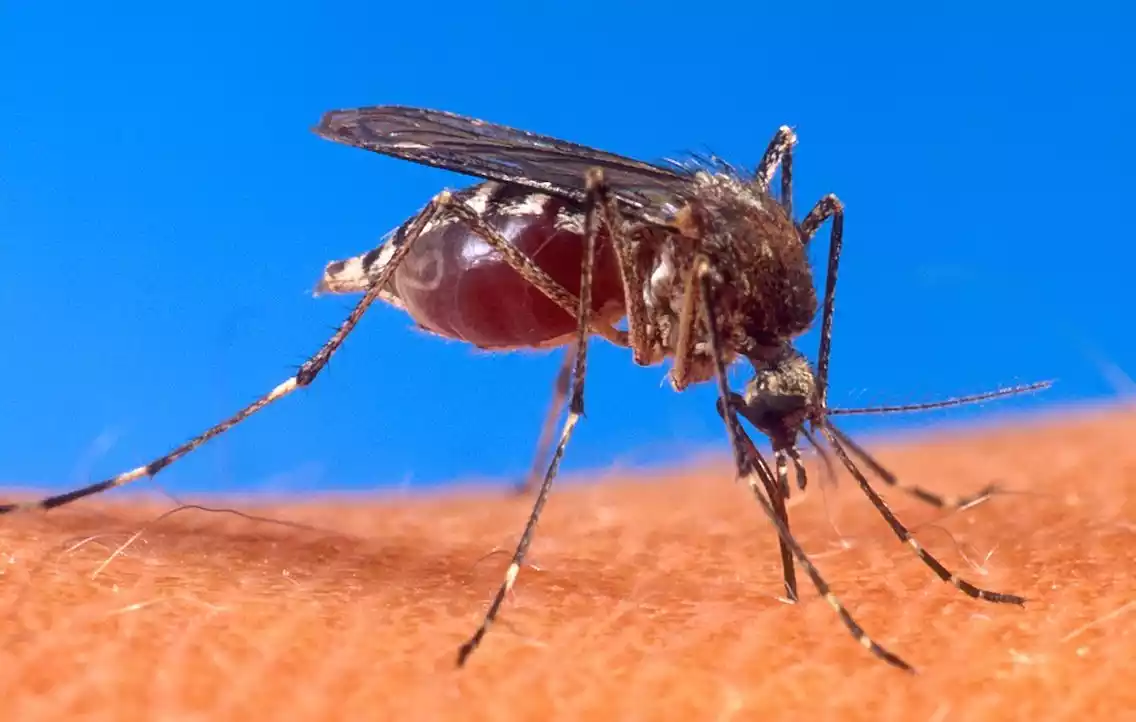
Featured image shows Ochlerotatus sp. mosquito biting a human. Public domain image by the U.S. Department of Agriculture (USDA) via the USDA website at http://www.ars.usda.gov/is/graphics/photos/aug00/k4705-9.htm


